
Choosing an anime adventures main unit matters because your first core carry unit shapes early fights, future upgrades, and the rest of your squad. Learn a practical way to compare damage, range, rarity, evolution potential, and synergy before investing your resources.
What a Main Unit Does in Anime Adventures
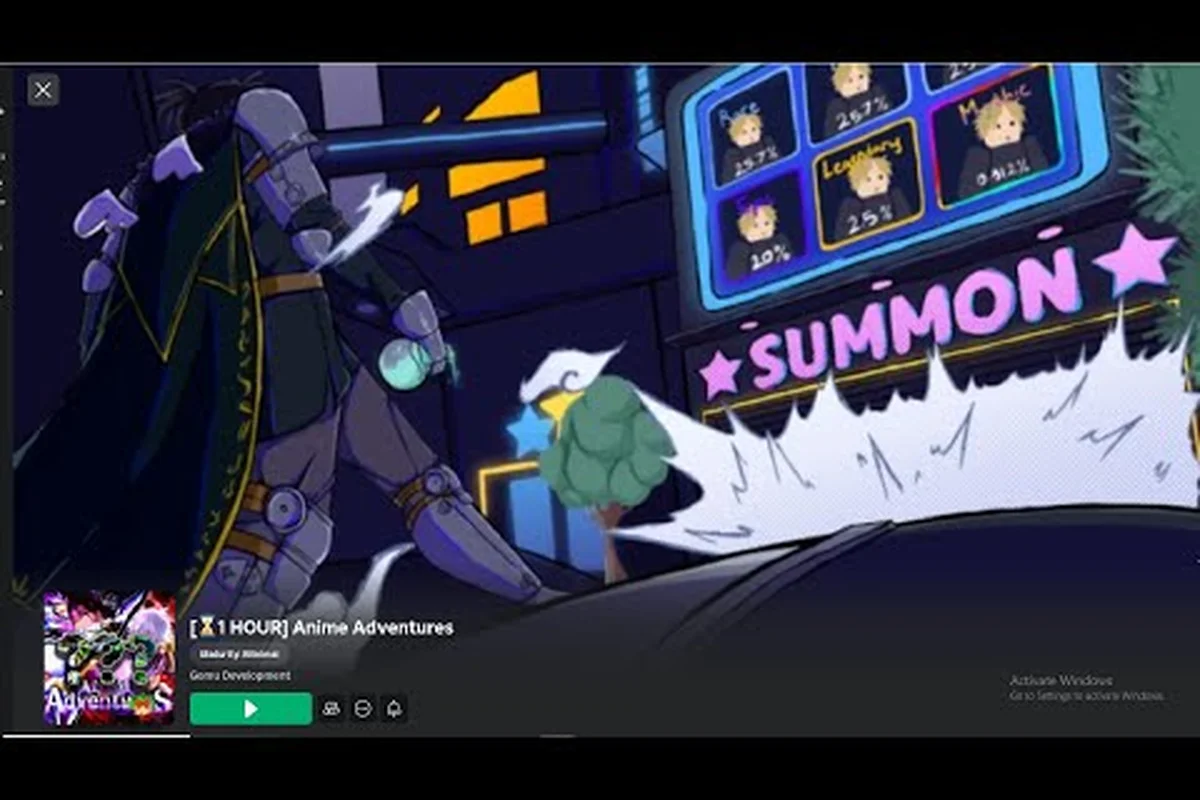
Anime Adventures is a Roblox tower-defense game from Gomu Development. The official game page describes a squad of anime units that defend against incoming waves, while leveling units unlocks additional abilities. A main unit is therefore the character you expect to contribute most consistently when you begin building a deeper roster.
The distinction matters because a memorable summon is not automatically the best permanent centerpiece. A strong early choice should survive the opening story waves, fit the map’s attack pattern, and have a progression path worth funding. It should also remain useful when your squad gains support units, wider coverage, and access to more advanced modes.
The supported progression sequence is straightforward: summon a roster, settle on a main damage unit, clear the opening story waves, evolve the unit that carries your runs, and then add dungeons, raids, relics, and Limit Break. That sequence comes from community guides rather than a published stat chart, but it provides a practical framework for decision order without pretending that exact breakpoints are known.
| Decision layer | What to evaluate | Evidence to use | Unknown to avoid |
|---|---|---|---|
| Immediate value | Attack range, wave coverage, ability visibility | Personal play tests and the unit’s in-game behavior | Invented damage formulas |
| Roster potential | Rarity, upgrade route, evolution fit | Current unit screen and community progression reports | Unsupported tier placement |
| Team value | Role overlap and possible combinations | Your existing squad composition | Guaranteed synergy claims |
| Resource value | Upgrade costs visible in the current account | Current in-game upgrade screen | Unpublished level caps or reward amounts |
This framework is central to any anime adventures gameplay guide because it turns a large roster decision into a sequence of manageable checks. It also prevents the most common planning error: investing heavily in a flashy unit before confirming that the unit can perform the job you actually need.
Treat Early Performance and Future Value Separately
Early performance answers a simple question: can this unit contribute during the first waves? Watch where it places attacks, how long it takes to produce useful hits, and whether its ability creates a clear advantage without perfect timing. Because beginners often spend every gem immediately, keeping some resources in reserve is wiser until you have a clearer picture of the squad.
Future value asks a different question: can this character remain relevant after your account develops? Upgrade access, evolution potential, and role coverage matter more than a single attractive animation or a rare label. The official page confirms that players can level units to unlock abilities, but it does not publish unit level caps, damage values, or stat breakpoints, so no universal numerical rule can replace a real test.
Comparing Anime Adventures Units Without a Tier List
Because only Rukia and Fusion Vegeto have verifiable community mentions, this guide does not present a named top roster or manufacture rankings. A personalized comparison is more reliable: test several units in the same setting, record the same observations, and select the unit that creates the clearest advantage for your own account.
Start with a short checklist rather than an endless search for a perfect answer. A candidate should offer at least one distinct contribution, have a visible route to improvement, and avoid making your strongest existing roles redundant. If two units fill the same place, the tie-breaker is often the upgrade you can sustain—not an imagined future tier.
| Comparison question | Strong positive sign | Warning sign | Practical decision |
|---|---|---|---|
| Does it cover the current stage well? | Repeatedly contributes to ordinary waves | Mostly useful in an isolated situation | Advance it only after repeated tests |
| Does its range matter? | Reaches targets without risky placement | Leaves most incoming units untouched | Favor coverage for general progression |
| Is its ability easy to use? | Activates reliably in normal combat | Requires conditions you cannot control | Test in realistic waves |
| Does the roster improve? | Adds a role the team lacks | Duplicates an existing carry | Keep it as support if synergy is better |
| Is development sustainable? | Visible upgrade or evolution path | No clear next investment | Delay commitment until the path is confirmed |
This is how to make an anime adventures long term progression plan without relying on a disposable ranking. A unit that performs well today and improves tomorrow usually provides more value than a unit that wins one showcase fight but leaves your account with several undecided squads.
Use a Three-Round Test
A three-round test gives you enough evidence without turning selection into an endless farm. Keep the same story area, squad arrangement, and upgrade approach across candidates whenever possible. If you change several variables at once, you may credit the unit for a result caused by placement, another character, or a temporary power spike.
Round one should test baseline consistency. Place the candidate where its attack pattern can operate, then observe ordinary waves rather than only the most difficult encounter. Round two should test team value by placing the unit alongside your current roster. Round three should test development potential by applying the next upgrade you can reasonably obtain and checking whether its contribution becomes more noticeable.
Record the result in a simple table rather than relying on memory. A useful note names the role, explains the observed effect, and identifies the next resource needed. That record becomes more valuable than arguments about rarity because it ties the decision to your actual play and current account.
The Anime Adventures Complete Guide to Unit Evaluation
A complete evaluation combines combat performance, resource planning, and account goals. The official Anime Adventures game page confirms the core loop: collect characters, lead a team of anime units, level them to unlock abilities, and defend through tower-defense waves. It also identifies Rare and Legendary labels on official thumbnails, although those labels alone cannot establish a complete ranking.
The absence of published stat breakpoints is useful information. You should compare what the interface actually shows and what the unit does in a normal wave, rather than assuming one rarity label always wins. Community guides also mention Mythic, Secret, and Limited categories, but those terms are not part of a complete official tier framework reviewed for this guide.
| Main-unit profile | Best fit | Main advantage | Main limitation | Best account stage |
|---|---|---|---|---|
| Broad-damage carry | General story progression | Can contribute across many ordinary waves | May duplicate another carry | Early squad formation |
| Specialized performer | A map or enemy pattern that favors its ability | Can outperform a generalist in the right situation | Less consistent elsewhere | After basic coverage is secure |
| Support-oriented pick | A roster with a strong main carry | Improves the team rather than replacing it | Not ideal as the only damage source | Mature team building |
| Evolution-focused candidate | An account ready to fund a specific path | Clearer reason to keep investing | Requires confirmation of the path and cost | After the first roster settles |
The best profile depends on the stage of your account. An early player may need broad contribution more than specialized power, while a returning account can fill a missing support role. The most important distinction is whether the unit is being chosen to carry the current team or to complete a role the team lacks.
Check Rarity Against Practical Value
Rarity can attract attention, but it should be one input rather than the final decision. Official thumbnails show Rare and Legendary labels, while community coverage extends the vocabulary. Those labels help establish collectibility, yet they do not tell you the exact damage, range, ability conditions, or upgrade cost for your current version of the game.
Use rarity to prioritize testing, not to authorize spending. A Legendary candidate may deserve a close look, but so can a Rare unit that covers a gap and performs reliably. Likewise, a high-rarity character can become a liability if its ability is difficult to activate or if your team already has several similar choices. Before committing, ask four account-specific questions:
-
Can this unit contribute without becoming the weakest link in the current formation?
-
Is there a visible upgrade or evolution path beyond the initial copy?
-
Does the unit add coverage, range, or ability utility that the squad lacks?
-
Can you continue developing it without ignoring other necessary systems?
Look for a Complete Upgrade Path
The word “path” is more important than any rumored milestone. The official page confirms level-based ability unlocks, and community guides describe Evolution, Starfruit, Relic, Limit Break, Gem, and related progression layers. These systems are not documented with exact thresholds or costs in the reviewed sources, so treat any numerical recipe as unverified.
A useful upgrade path has three parts: the next improvement, the resource required, and the benefit you expect to gain. If one part is unknown, keep the decision provisional. The Anime Adventures account progression guide can help organize the surrounding systems before you commit scarce resources to a single character.
| Path element | What to verify | Why it matters | Safe conclusion when unknown |
|---|---|---|---|
| Leveling | Whether new abilities are visible in the unit screen | Confirms immediate growth potential | Avoid promising a specific threshold |
| Evolution | Whether a qualifying unit and materials are available | Creates a reason to keep the unit | Confirm the route before investing heavily |
| Limit Break | Whether the unit is eligible in the current interface | Adds a later progression layer | Treat community mentions as unverified |
| Team support | Whether the unit improves another core unit | Increases total roster value | Compare roles, not isolated performance |
Turning One Carry Into a Durable Roster
A main unit should be the anchor of a plan, not the entire plan. Once you identify a reliable carry, build around it. Add coverage when waves expose a weakness, add support when the squad needs broader utility, and reserve resources instead of converting every gem into an immediate summon.
The Anime Adventures unit priority and placement guide is useful for turning the first choice into a formation, while broader unit references can help separate the confirmed roster from community descriptions. Avoid collecting a large number of characters without a plan: squad composition produces more value than an oversized but redundant roster.
| Squad-building layer | Main-unit relationship | Recommended action | Avoid |
|---|---|---|---|
| Core damage | Establishes the primary damage role | Prioritize reliable performance and upgrades | Duplicating the same role repeatedly |
| Coverage | Handles targets the core unit cannot reach | Add when ordinary waves expose a gap | Changing the carry for every small issue |
| Support | Improves team efficiency or survivability | Add after the core role is stable | Using support as the only damage source |
| Event flexibility | Covers temporary modes and limited-time content | Keep optional reserves available | Spending every resource on one unit |
The distinction between a main unit and a flexible roster is central to anime adventures long term progression. Your main unit deserves the deepest investment because it supports repeat play, but your account should also retain enough flexibility to handle dungeons, raids, Infinite Mode, and time-limited events described by community guides.
Decide When to Switch or Add a Unit
Switching should follow evidence, not novelty. Keep your current main unit if it still performs consistently, supports the next available improvement, and fits the content you play most often. Consider switching when a new unit solves a persistent problem, offers clearly better contribution in the areas you actually face, or enables a more sustainable team.
“New” is not a reason by itself. Summon rates, drop tables, reward amounts, and exact costs have not been published by Gomu Development, so scarcity claims should not drive the decision. Compare the practical consequences of investing in the new unit against improving the current one. A modest improvement to an established carry can be more valuable than an unproven transfer of resources.
| Reason to change | Evidence required | Action |
|---|---|---|
| New role | The candidate handles a role no current unit covers | Add it, then re-evaluate the formation |
| Better real performance | Repeated test results clearly favor it | Upgrade selectively before moving resources |
| Sustainable development | A visible improvement path exists | Compare projected needs with the current carry |
| Event-only value | It is strong in a temporary mode but weak elsewhere | Keep as a reserve rather than the main unit |
| Curiosity without evidence | One impressive fight or a rarity label | Do not commit yet |
This decision table prevents sunk-cost switching without making every new summon irrelevant. Keep the standard consistent: a new unit should create a measurable advantage for the content you play, not merely look more impressive than the unit already doing the job.
Main-Unit Decision Checklist for Your First Carry
Use this checklist after a candidate has passed initial combat tests. It brings together the official features, community-reported progression systems, and your account needs. The purpose is not to produce a universal answer; it is to make the reasoning visible so you can change course when better information appears.
-
Combat contribution: Does the unit repeatedly help against ordinary story waves?
-
Ability clarity: Can you tell what the ability does and when it becomes available?
-
Range and placement: Can you use the unit without continually adjusting its position?
-
Roster distinctiveness: Does it cover a gap rather than duplicate a stronger role?
-
Development visibility: Is there a clear next upgrade, evolution, or progression decision?
-
Resource sustainability: Can you fund the unit while retaining reserves for other squad needs?
-
Update resilience: Will the choice still make sense if a new unit arrives?
Community experience supports an early focus on learning placement and wave timing, which makes the checklist especially useful before a roster becomes complicated. A unit that seems strong under perfect conditions may be less valuable if its range or ability creates placement constraints in ordinary combat.
A Simple Scoring Sheet
A weighted score can make the final decision less emotional, but it should summarize evidence rather than replace it. Give the greatest weight to the factors that affect your actual play: contribution, fit, development, and resource cost. Use rarity and appearance as low-weight supporting factors.
| Criterion | Suggested weight | What a strong score means | Evidence to record |
|---|---|---|---|
| Combat contribution | High | Helps consistently in ordinary waves | Notes from repeated tests |
| Role fit | High | Adds a needed function | Comparison with current squad |
| Development path | High | Has a visible next investment | Current upgrade screen |
| Placement practicality | Medium | Works without constant repositioning | Placement observations |
| Rarity | Low | Supports a potential preference | Current unit label |
| Appearance | Low | Improves enjoyment but not output | Personal preference |
Give each category a simple rating from one to five, multiply it by the weight, and review which low score caused most of the gap. If the answer is development visibility, investigate before spending. If the answer is combat contribution, test the candidate in more representative waves. This process turns “I like this unit” into a more complete decision.
Review the Choice After Major Updates
Reviewing your decision is part of anime adventures long term progression. The reviewed content cycle was Update 20, while community coverage was preparing for Update 21, but no dated Update 21 release was confirmed in the sources. Updates can change the value of a unit, introduce new characters, or alter which progression resources matter.
After a major update, repeat the same three-round test instead of rebuilding the entire account from scratch. Compare your established main unit with any promising newcomer, then review whether the current formation still covers the content you play. Keep notes about what changed, including new systems, free grants, or unit adjustments, but distinguish confirmed information from community reports.
The official game page says returning players will be granted missing gems or the limited unit upon release, while community coverage identifies the limited unit without a confirmed name. That promise reduces the urgency of panic-summoning, although it does not replace planning. It also makes the three-round comparison especially valuable: observe the live account after the update, then decide from evidence.
Frequently Asked Questions
Should I choose the rarest Anime Adventures unit as my main unit?
Not automatically. Rarity can make a character worth testing, but your decision should also reflect combat contribution, range, role fit, and a visible development path. Official information does not provide enough numerical data to declare a universal winner, so compare candidates through repeated tests in the content you actually play.
What unit should I use first in Anime Adventures?
Choose the unit that contributes most consistently in ordinary story waves, fits your formation, and offers a clear next improvement. Avoid selecting solely from a rarity label or one impressive fight. If two candidates look similar, keep the one with the more practical upgrade route and better match for your current squad.
How do I know when to replace my main unit?
Replace or supplement it when a new unit creates a measurable advantage, fills a missing role, or offers more sustainable development. Do not switch only because a new character feels stronger. Record repeated test results, review the visible upgrade path, and consider whether the established unit still supports your most common modes.
Is Evolution necessary before choosing a permanent main unit?
Evolution is one progression layer mentioned by community guides, but it should not be the sole selection criterion. First confirm that the unit performs well and has a visible improvement route. The reviewed sources do not publish exact Evolution requirements, so verify the current in-game information before committing resources.
Can I build a good squad around one main unit?
Yes, but the account should still develop flexible roles around that core carry. Add coverage when the formation cannot handle ordinary waves, then add support or event specialists when needed. Keeping some resources in reserve helps you respond to dungeons, raids, Infinite Mode, and limited-time events without abandoning the main squad entirely.