
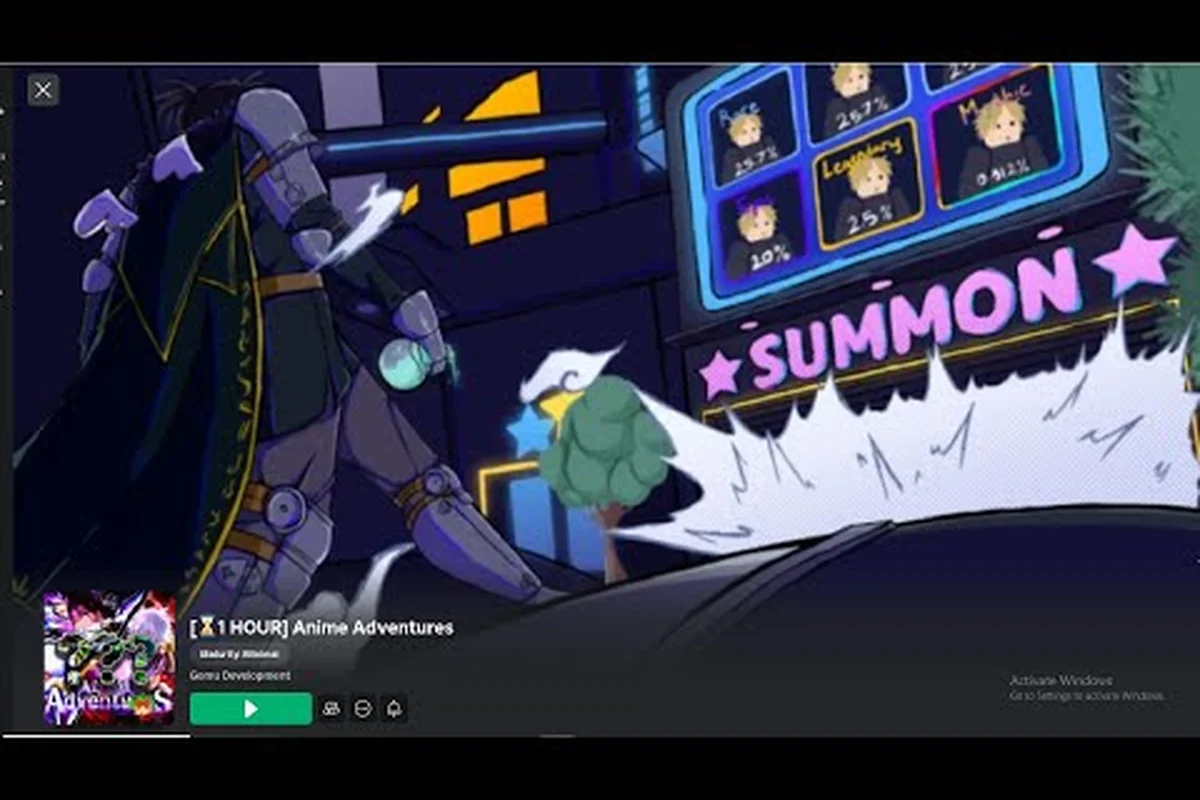
The Anime Adventures world list matters because progression depends on choosing the right map, understanding story waves, and preparing a squad before harder areas appear. The game’s official premise confirms multiple threatened worlds, yet it does not publish a complete stage catalog, so this guide separates confirmed information from community-reported systems.
What the Anime Adventures World List Confirms
The Anime Adventures world list is easier to understand when the confirmed structure is separated from community terminology. The official Anime Adventures game page identifies the game as a strategy and tower-defense experience created by Gomu Development. Its story premise centers on a catastrophic event that draws threats into multiple worlds and brings heroes together to defend them.
That premise confirms a multi-world story structure, but it does not name every world, stage, enemy, wave, or unlock condition. The reviewed official materials also provide no dated stage list, level caps, damage tables, summon rates, or drop rates. Any guide presenting a complete set of those details as official would be overstating the available evidence.
| Verified detail | What it tells players | What remains unspecified |
|---|---|---|
| Multiple threatened worlds | Story activity spans more than one setting | Individual world names |
| Tower-defense waves | Heroes defend against repeated enemy waves | Wave counts and enemy stats |
| Hero collection | Players collect unique characters | Full unit list and rarity distribution |
| Unit leveling | Leveling can unlock additional abilities | Level caps and ability values |
| Squad building | Players assemble teams for defense | Optimal unit slots or formation values |
| Update 20 coverage | Current community coverage centers on Update 20 | Confirmed Update 21 release details |
This distinction is especially important for an Anime Adventures all worlds request. A true numerical catalog cannot be produced responsibly from the confirmed material because the developer has not published one. Instead, players can organize the game by story worlds and by the separate activity families that community guides associate with them.
Confirmed Story Systems and Community-Labeled Modes
The official game page confirms story worlds, character collection, unit progression, and wave defense. Community guides add labels such as Story Mode, Infinite Mode, Dungeons, Raids, and limited-time event maps. These labels are useful for navigation, but they should be treated as community-reported until Gomu Development confirms their exact definitions and requirements.
The same distinction applies to progression systems. Community coverage commonly references Summon, Evolution, Starfruit, Relic, Limit Break, Gem, Dungeons, Raids, and Infinite Mode. Their inclusion in player discussions does not establish a specific stage requirement, reward amount, or unlock formula. The safest approach is to use them as preparation categories and verify the actual trigger in the live interface.
Why an Exact Stage Catalog Is Unavailable
Gomu Development has not published a comprehensive Anime Adventures stage guide with fixed map names, wave totals, enemy statistics, or unlock requirements in the reviewed sources. This means an exact “all worlds” list would require unverified additions. A better guide shows what each supported activity family is meant to test and how a player can plan without relying on invented numbers.
That approach also helps with version changes. The current content cycle is Update 20, while community coverage was preparing for Update 21 at the time of research. Since no confirmed Update 21 release date or stage details were available, the live game interface and official announcements remain the best places to check for newly added or renamed content.
How to Organize Anime Adventures Story Worlds
A practical Anime Adventures world guide groups the game by the job each activity asks you to perform. Story worlds form the campaign framework, while Infinite Mode, Dungeons, Raids, and temporary events can add different structures around that framework. This is a principle-based organization rather than a fabricated list of named maps.
| Activity family | Source status | Main player objective | Preparation priority |
|---|---|---|---|
| Story worlds | Confirmed in the premise | Defend against waves in campaign settings | Complete basic progression first |
| Infinite Mode | Community-reported | Endure an extended challenge | Stable damage and unit coverage |
| Dungeons | Community-reported | Enter a separate repeatable challenge | Flexible squad and recovery |
| Raids | Community-reported | Face a focused group encounter | Coordinated unit roles |
| Limited-time events | Community-reported | Complete temporary objectives | Flexible, event-ready teams |
| Summer event map | Community-reported | Play a seasonal map | Event-specific preparation |
| April Fools event map | Community-reported | Play a themed surprise map | Check current event details |
This table answers the practical intent behind Anime Adventures story mode searches without pretending that unreleased or unconfirmed details are facts. The official premise supports the existence of several story settings, and community reports consistently separate the broader campaign from other repeatable modes. Their exact boundaries may change, so treat the categories as a way to understand purpose rather than a fixed encyclopedia of map names.
The Core Story World Loop
The central loop begins with assembling a team of anime units and placing that team in a defense scenario. Waves then arrive, and players must decide how to use the abilities available to them. As units gain levels, additional abilities can be unlocked, while the official premise frames every world as part of a larger effort to contain the catastrophe.
A player checking Anime Adventures story worlds should therefore look for three pieces of information inside the game: the active map, the stage or wave indicator, and the current objective. If any of those elements is difficult to interpret, the map interface may provide a clearer description than an outdated community video or an unsourced list.
| Story-world check | Why it matters | Practical response |
|---|---|---|
| Map identity | Confirms which setting is active | Note the name shown in the interface |
| Stage indicator | Shows current campaign position | Record the displayed stage number |
| Wave indicator | Tracks defense progress | Use it to judge the attempt’s phase |
| Objective text | Explains immediate goal | Read it before changing units |
| Unit ability state | Reveals whether progression is active | Check level-gated abilities |
| Unlock prompt | Identifies the next requirement | Follow the in-game prompt |
These checks are especially important for a Anime Adventures map guide, because exact layout recommendations are not supportable without confirmed map screenshots or wave data. Map identity, objectives, and unlock prompts provide factual anchors that players can use without relying on speculation.
A Step-by-Step Anime Adventures Map Guide
A dependable Anime Adventures map guide follows the information shown by the game rather than assuming a fixed world order. Since no official stage list or unlock formula has been published, the process below focuses on sequence, verification, and preparation. It helps players move through content while keeping uncertain details out of the strategy.
Step 1: Confirm the Correct Game and Mode
Begin on the official Anime Adventures place. The official game page warns that other games using the same name are not affiliated with Gomu Development. This guide covers place ID 117965110267191, in universe 6930929888. Confirming the game first prevents unit, mode, and update details from another similarly named experience from being mixed into the same planning process.
Next, identify whether the intended activity is a story world, Infinite Mode, Dungeon, Raid, or event map. The first four labels are part of community coverage, and event maps are discussed by community guides as well. This distinction matters because a preparation choice that works for endless survival may not suit a story stage, a group-focused challenge, or a temporary event.
Step 2: Read the Current Stage and Objective
Before deploying a team, inspect the stage label, wave count, and objective text. These in-game cues answer three separate questions: where you are in the campaign, how far the attempt has progressed, and what the map currently requires. This is more reliable than a generic list because stages may change as the game moves beyond Update 20.
| Preparation step | Information to inspect | Reason it matters |
|---|---|---|
| Verify the map | Named location or event title | Prevents accidental mode confusion |
| Check the stage | Displayed stage number | Establishes campaign position |
| Watch the wave | Current wave indicator | Reveals when abilities are being tested |
| Review the objective | In-game task text | Clarifies immediate success conditions |
| Inspect squad slots | Available deployment positions | Helps prevent an incomplete team |
| Confirm unit levels | Unlocked abilities and level state | Connects progression to performance |
Step 3: Build for the Encounter’s Demand
The official page confirms that players lead a team of anime units, level units to unlock abilities, and defend against waves. That supports a simple preparation rule: choose units whose current abilities can be deployed during the encounter you are actually facing. Do not assume a favorite character remains optimal in every map or mode, because the reviewed sources publish no damage values, targeting rules, or unit-specific stage rankings.
Rukia and Fusion Vegeto are the only unit names confirmed by community mentions in the reviewed material. Even those names should not be turned into a fixed tier placement or guaranteed stage solution. The practical need is a working team with useful coverage, and the Anime Adventures All Units guide provides a safer starting point for organizing what the community has reported about units and rarity.
Step 4: Test and Adjust
Treat each attempt as a diagnostic. If the objective changes, observe the difference rather than repeating the same setup automatically. If a later stage introduces a new threat pattern, test whether the squad needs a different ability or placement. Because no official enemy stat tables are available, in-game results are more informative than unsupported claims about counters.
| What you observe | Likely interpretation | Adjustable response |
|---|---|---|
| Objective remains incomplete | Current approach does not meet the stage condition | Review units, placement, and ability timing |
| A new threat appears | Encounter demand changed | Test a complementary unit role |
| Units lack expected abilities | Progression is incomplete | Level them and verify unlocked skills |
| Team feels too narrow | Coverage is limited | Add a unit with a different function |
| Progress continues across waves | The setup is working | Preserve the core team and refine placement |
| A prompt blocks entry | Requirement is unmet | Follow the displayed unlock condition |
This step-by-step process makes an Anime Adventures story worlds review practical. Rather than claiming that one map is easier because of a hidden stat advantage, it records what the game shows, tests a reasonable squad, and changes one variable at a time. That method remains useful even if the interface or content cycle changes.
Story, Infinite, Dungeon, Raid, and Event Comparisons
An Anime Adventures all worlds overview is most useful when it compares activity types rather than ranks them. The official description does not publish a canonical world order, stage count, or difficulty table. The comparison below uses confirmed structural information and clearly labels community-only categories, helping players understand why they might need different preparation for each activity.
| Comparison point | Story worlds | Infinite Mode | Dungeons | Raids | Limited-time events |
|---|---|---|---|---|---|
| Evidence level | Confirmed | Community-reported | Community-reported | Community-reported | Community-reported |
| Core format | Campaign-style wave defense | Extended challenge | Separate repeatable challenge | Group-focused encounter | Temporary objective |
| Official trigger details | Not published | Not published | Not published | Not published | Not published |
| Best preparation | Match the displayed objective | Keep a stable long-run team | Maintain flexible coverage | Coordinate available roles | Check the live event rules |
| Main uncertainty | Map and stage catalog | End condition and rewards | Entry method and rewards | Entry method and rewards | Event timing and rules |
| Progress signal | Stage and wave indicators | Survival progress | Completion status | Challenge completion | Event objective |
The comparison also reveals an important gap in many fan lists: missing information is not the same as no content. The absence of a published level cap, reward amount, or stage requirement does not mean the feature lacks a value; it means readers should not be shown a fabricated number.
Choosing the Right Progression Track
Newer players should generally establish the core loop before chasing optional systems. Collect units, understand placement, level them to unlock abilities, and complete straightforward story objectives. Only then should you compare the additional activity families named by community guides. This order reduces the risk of spreading resources across unfamiliar systems before basic squad readiness is secure.
| Player situation | Recommended track | Why |
|---|---|---|
| Learning basic defense | Story worlds | Uses the confirmed campaign structure |
| Improving unit readiness | Leveling and ability checks | Directly supports the official progression loop |
| Preparing for longer defense | Infinite Mode | Community-reported challenge built around endurance |
| Seeking an optional challenge | Dungeons | Adds a separate activity category |
| Preparing for group content | Raids | Focuses on a coordinated encounter |
| Responding to a temporary event | Event map | Keeps the plan tied to current availability |
Players who need more detail about the optional branches can use the Anime Adventures How to Unlock Dungeons page to investigate the practical distinction between early, late, and group-oriented content. The exact unlock requirements should still be checked in the game, because the reviewed official material does not list them.
Handling Temporary and Event Content
Community guides mention summer and April Fools event maps. Those labels should be treated as reports of recurring event categories rather than a guaranteed schedule. For a new event, verify its title, objective, and availability directly in the game, then decide whether the current squad needs a different approach.
The Anime Adventures Raid Guide can help organize that preparation for raid and event-related activities. Its value is not a claimed reward table, which the reviewed sources do not confirm, but a method for comparing team readiness, objective clarity, and available community-reported systems before an attempt.
Building a Progression-Ready Squad for Any World
The best squad for an unknown stage is the one that lets you test the encounter without missing basic mechanics. The official game page confirms hero collection, squad building, wave defense, and unit leveling. The community adds several upgrade systems, but it does not provide enough verified numerical detail to rank every unit or assign a universal best team. Preparation should therefore center on confirmed functions and visible conditions.
| Preparation layer | Confirmed or reported basis | What the player should check |
|---|---|---|
| Core roster | Confirmed | Whether the team can cover the current waves |
| Unit levels | Confirmed | Whether desired abilities are unlocked |
| Squad composition | Confirmed | Whether all planned units can be deployed |
| Gems | Community-reported | Whether the system is available and relevant |
| Relics | Community-reported | Whether the feature is accessible for this squad |
| Limit Break | Community-reported | Whether progression can be improved further |
| Starfruit | Community-reported | Whether it applies to the current unit plan |
| Evolution | Community-reported | Whether the selected unit has a relevant upgrade path |
This table supports an Anime Adventures world guide that is honest about source quality. It also highlights the difference between a visible gameplay action, such as leveling a unit, and a progression feature whose exact application must be confirmed in the live interface.
A Repeatable Six-Step Preparation Routine
-
Confirm the map. Read the title, stage number, and wave indicator in the game.
-
Read the objective. Determine the immediate condition for clearing the stage.
-
Select the squad. Use units whose abilities cover the current encounter, without relying on unsupported tier lists.
-
Check readiness. Review levels, unlocked abilities, and the community-reported upgrade systems that apply to the team.
-
Attempt the stage. Observe how the squad performs rather than treating a community label as a guarantee.
-
Record the result. Note what changed, what failed, and which adjustment produced the clearest improvement.
The routine is deliberately concise because progress should produce a clear next action. If a stage stalls, change one element at a time: the unit lineup, the ability order, or the placement. If the objective is unclear, reread it before concluding that the squad is weak. This method turns the map guide into a repeatable process rather than a collection of unsupported claims.
Common Mistakes in World and Stage Planning
The largest mistake is treating an unverified list as official. Another is assuming that a unit mentioned by players has confirmed stats or a fixed role. A third is ignoring the displayed objective because the player expects every map to work like the previous one. These errors are understandable, but they reduce the value of the world list.
| Common mistake | Why it causes problems | Better response |
|---|---|---|
| Calling community maps official | Misrepresents the source | Label community coverage explicitly |
| Inventing wave counts | Creates false progression landmarks | Use the live wave indicator |
| Claiming a fixed best unit | No verified ranking supports it | Check abilities and current needs |
| Ignoring event rules | Objectives can differ | Read the event panel before preparing |
| Mixing another game’s data | Produces irrelevant recommendations | Verify the official place and creator |
| Treating old videos as current | Update 20 may differ from older coverage | Compare dates and current interfaces |
By avoiding these mistakes, the Anime Adventures stage guide becomes a dependable framework for evaluating any stage. The player knows which facts are official, which labels are community-reported, and which decisions must be made from live game information.
What to Check When New Worlds or Updates Appear
The world catalog is likely to evolve, but a new release should be treated as an announcement to verify rather than a list of facts to assume. Community coverage was preparing for Update 21 while the current cycle remained Update 20, and no official Update 21 release date or content list was confirmed in the reviewed materials. That makes update checking an important part of any current Anime Adventures world guide.
| Update signal | Reliable confirmation | Practical response |
|---|---|---|
| New map appears in game | Live interface | Record title, objective, and stage position |
| Official video posts a trailer | GomuDev YouTube channel | Watch for named content and visual context |
| Official Discord announces changes | Official server | Treat as an announcement, not a full stat sheet |
| Community guide lists a stage | Player coverage | Verify the map inside the game |
| Older stage disappears | Current interface | Check whether it moved or was replaced |
| New unit enters a stage | Live unit screen | Test it rather than assuming its power |
Players should pay particular attention to the official source linked from the game. The official game page warns that unrelated games using the Anime Adventures name have no affiliation with Gomu Development, making source verification especially important when similarly named listings and community reposts appear.
A Simple Update Log for Players
Keep a compact personal log when content changes. Record the date, the update or event name, the affected activity family, and what changed in the interface. This habit makes it easier to distinguish a new map from a renamed stage, a temporary event from the main story, and a genuine system change from a community misunderstanding.
| Log field | Example of the information to record | Practical value |
|---|---|---|
| Date | Date observed in the game | Establishes a timeline |
| Version context | Update 20 or another confirmed label | Connects changes to a cycle |
| Content name | Exact in-game title | Prevents naming confusion |
| Activity type | Story, Infinite, Dungeon, Raid, or event | Keeps categories consistent |
| Change observed | New objective, stage, or unit | Records what actually changed |
| Source | Official page, video, Discord, or community | Shows confidence level |
The Anime Adventures Map Strategy companion is useful for turning these observations into stronger stage preparation, particularly when comparing progression across changing maps. Because the game is actively updated, a reliable guide should teach players how to update their own list rather than freeze an outdated catalog.
Frequently Asked Questions
How many worlds are available in Anime Adventures?
Gomu Development’s official materials confirm a multi-world story structure, but the reviewed sources do not publish a complete count or stage catalog. An exact number would therefore be unverified. Check the live world and stage selectors for the current list, especially when a new update changes the content cycle.
What is the complete Anime Adventures all worlds list?
A complete, officially confirmed list is not available in the reviewed sources because the developer has not published every world name, stage, wave count, and unlock condition. The reliable way to build one is to record each in-game map title, its activity type, its stage indicator, and whether the objective is a story, Infinite Mode, Dungeon, Raid, or temporary event.
Does Anime Adventures have Story Mode and separate story worlds?
Yes, the official premise confirms that heroes defend multiple worlds, while community coverage commonly refers to Story Mode and other activity families. However, the reviewed official material does not define the precise boundaries between every mode. Read the current map interface and objective to confirm how a particular stage is categorized.
How do I find unlock requirements in the Anime Adventures world guide?
Look for the game’s own unlock prompt when a map or stage cannot be entered, then verify the requirement in the live interface. The official sources reviewed for this guide do not publish a universal unlock formula, stage order, level cap, or reward amount, so community claims should be treated as leads rather than confirmed conditions.
Can I plan every Anime Adventures story world before the next update?
You can prepare a dependable process, but not a permanent exact catalog. The current content cycle is Update 20, while community coverage was preparing for Update 21 without a confirmed release schedule. Save each map’s visible title, objective, stage, and unit setup, then recheck the live game whenever announcements or new content appear.